

How very annoying for you! Without knowing a lot more about the layout of your garden and its surroundings it’s a bit difficult to be too sure, but there are a few possible culprits which spring to mind.
One obvious possibility is that some budding local young naturalist is doing a spot of spawn “re-location”; having been just such an annoying little nuisance myself as a child where my beloved amphibians were concerned, I know you should never underestimate the determination of frog-loving youngsters! However, the activities of such well-intentioned, if deeply irritating, invaders normally take place during daylight hours – and can usually be curtailed by good fences and a few strategically-planted spiky bushes.
Ducks would probably be the second suspect for spawn theft; mallards in particular seem to be quite partial to frogspawn and they usually turn up at night – or at least around dusk. If the water surface seems a bit oily (from their feathers) and the pond edges muddier than normal, you’ve probably found the guilty parties.
However, none of this really explains why the spawn should hang about for a week and then disappear; it all seems a little too regular for small children or hungry ducks! If the jelly changes in appearance at all during the week it lies there – especially if it goes milky or starts to lose its structure – it sounds as if the eggs themselves are not viable, which would suggest that something else could be going on.
I wonder if you have checked your pond water quality recently. Factors such as a shift in pH, changes in nitrates and so on might be causing problems for the spawn. If you do have water quality records going back to any of the years before this started happening, it might give a clue – and if you haven’t been testing previously, now’s a good time to start.
The only other possibility which springs to mind is that the local frog population isn’t quite as healthy as it was fifteen years ago. Many amphibians are in decline – principally due to the effect of the highly infectious chytrid fungus; an ill or ageing population of frogs might simply not be producing as good quality eggs as before. Your local Wildlife Trust should be able to tell you about the general status of frogs in your area.
What to do About It
One thing you might like to try in the spring is to take some of the spawn as soon as you notice it and leave it somewhere safe – perhaps a garage or shed – in a bucket of pond water and keep a careful eye on it. Nothing’s likely to get at it, so if your problem really is of a feathered or short-trousered kind, you should get a horde of wriggling tadpoles in the normal run of things. On the other hand, if the spawn simply starts to disintegrate, you’ll be able to watch what’s happening, which might give a better clue as to the cause.
The only other suggestion that might be worth trying is to suspend a suitable mesh cover over the pond itself, to prevent anything getting at your spawn; it won’t tell you what has been treating your garden as a snack bar, but it might make it a little less appealing in the future.
How to tell if frogspawn is alive?
- Look for movement: You can gently shake the container or gently stir the water surrounding the frogspawn. If the eggs move or jiggle, this is a good indication that they are alive. (It is important to handle the frogspawn gently and avoid disturbing the eggs too much, as they are delicate and can be easily damaged.)
- Look for changes in appearance: If the eggs are alive, they will start to change in appearance as they grow and mature. You may be able to see tiny black dots inside the eggs, which are the developing tadpoles.
- Look for signs of growth: As the tadpoles develop, you will see changes in the size and shape of the eggs. The eggs will become larger and more elongated as the tadpoles grow.
- Look for signs of activity: As the tadpoles develop, you may be able to see them moving around inside the egg mass. They may wiggle or squirm, or you may be able to see their tiny tails moving.
Does frogspawn sink?
Frogspawn generally does not sink. The eggs are surrounded by a gelatinous substance that makes them buoyant and allows them to float on the surface of the water. This buoyancy helps to protect the eggs from predators and also ensures that they are exposed to sunlight, which is necessary for their development.
If the frogspawn is damaged or if the surrounding water is disturbed, the eggs may sink.
Further reading
- How prevent frogs dying in your pond
- Understanding Pond newts and toads
- Adding pond snails to your pond
Frogs and Frogspawn
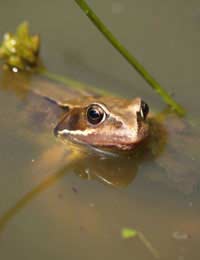 Frogs have a special place in the hearts of most wildlife pond-keepers if only because they seem so very willing to reward our efforts by using our ponds so readily. Secretive outside the breeding season, frogs make a welcome addition to the garden – not least because they provide a highly effective slug control service, offering protection to the hostas and other tender plants in their adopted patch.
The Common Frog (Rana temporaria) is the most widespread kind throughout Europe – a remarkable survivor, which has increasingly made use of garden ponds as more and more of its natural wetland habitats disappear.
Froggy Goes A-Courting
Frogs usually emerge from hibernation at the beginning of March – though in some years they may put in an appearance even earlier – and spawning takes place from March through into April. At this time of year, these normally silent creatures become quite vocal, their underwater croaking frequently audible from some distance away and this can often be the first sign of their arrival in the pond. If large numbers of frogs are present, this sound has sometimes been likened to the rumble of a distant railway train.
Breeding involves the male grasping the female from behind, locking his forelegs around her body just beneath her armpits – an embrace known as “amplexus” – and he develops a special pad along his thumb to help him get a good grip on his girlfriend’s slippery skin. As she lays her eggs, he will fertilise them.
This instinctive need to find and grab a female sometimes leads to a few misunderstandings, as anything of about the right size may be grasped by a hopeful male – including goldfish and other males! While a female who is not ready to lay – or has already spawned – will bend away and kick at him and another male lets out a very distinct sound to tell our suitor the error of his ways, fish – unable to communicate with the amorous frog – may be grasped for some time before realisation dawns.
Female frogs lay their eggs quite quickly, producing perhaps 1,000 in an hour and laying around 3 – 4,000 in total. When newly laid, the eggs sink to the bottom but as the jelly covering them gradually swells with pond water, they float to the surface, where they remain often for two or three weeks until they hatch into tadpoles. Over the next three months, they develop from quarter-inch long “commas” hiding in weeds, then becoming carnivorous as first hind-legs and then fore-legs grow, before finally going through metamorphosis – changing into tail-less and perfectly formed miniature frogs. These small replicas of their parents then make their way onto land – a rainstorm often triggering large numbers to make the journey, which may well be the origin of the expression “raining frogs.”
Attracting Frogs to the Pond
The good news about frogs is that they are not particularly fussy and will happily use a wide variety of ponds, which makes them very easy to accommodate. The only real absolute necessity is that they will need a way to get out of the water – they can jump in, but an exit route is essential, particularly for the baby frogs. However, to provide them with the ultimate in desirable residences both inside and outside of the breeding season, the pond and its surroundings need to offer them somewhere to hide.
A well planted wildlife pond, especially with a bog garden attached will provide good refuge and building a rockery with lots of nooks and crannies, piling up some old logs or half-sinking old terracotta plant pots or pies beside the pond will meet their needs on dry land. It is also a good idea not to be too diligent when it comes to pruning. The plants growing around the pond’s edge often provide valuable cover to adults and young alike.
Although frogs tend to arrive all on their own, if you simply cannot wait, the quickest way to get the ball rolling is to introduce some frogspawn. Many wildlife ponds attract large numbers of breeding frogs – resulting in far more frogspawn than they can cope with, leaving their owners only to glad to find some of it a new home. If you do not know anyone with excess spawn, the local wildlife trust can often help suggest sources.
The last hundred years have seen the loss of something in the region of 70 per cent of Britain’s natural lakes and wetlands, but fortunately frogs in particular have been very quick to adapt to using garden ponds instead. While amphibian numbers around the world have been suffering significant decline in recent times, the frog seems to be a bit more of a success story – and long may that continue.
Which animals eat frogspawn?
There are several animals in the UK that eat frogspawn. Some of these animals include:
- Fish: Fish such as carp, tench, and pike are known to eat frogspawn and tadpoles.
- Birds: Some birds, including herons and gulls, will eat frogspawn and tadpoles.
- Newts: Smooth and palmate newts are known to feed on frogspawn.
- Insects: Water beetles and water scorpions are known to eat frogspawn and tadpoles.
- Mammals: Although less common, mammals such as hedgehogs and shrews have been known to eat frogspawn.
It is important to note that while these animals may eat frogspawn and tadpoles, not all of them are major predators of amphibian eggs. The biggest threat to frogspawn and tadpoles comes from habitat destruction, pollution, and disease.
Do ducks eat frogspawn?
Yep, ducks are known to eat frogspawn. Ducks are omnivores and will eat a wide variety of foods, including insects, small fish, and amphibian eggs such as frogspawn. In the wild, ducks may forage for frogspawn in ponds, marshes, and other wetland habitats. However, it is important to note that while ducks may eat some frogspawn, they are not a major predator of frog eggs. Other animals, such as fish, snakes, and some birds, are more likely to feed on frogspawn and tadpoles.
How do I encourage frogs and frogspawn in my pond?
- Plants: Adding native aquatic plants to your pond can provide important cover and shelter for frog eggs and tadpoles. Plants such as water lilies, water forget-me-nots, and marsh marigolds are good options.
- Logs and rocks: Adding logs and rocks to the edge of your pond can create hiding places for adult frogs and tadpoles. They also provide a basking area for frogs to soak up the sun.
- Shallow areas: Creating shallow areas in your pond can provide a suitable breeding ground for frogs. Frogs prefer shallow water that is less than 30cm deep.
- Hideouts: You can create hideouts in your pond by placing upside-down plant pots or pieces of pipe in the water. These can provide a place for the frogs to hide from predators.
- Add frogspawn! If you have a friend or neighbour who has frogspawn, you can ask them for some to add to your pond. This can help to jumpstart the breeding process in your pond. Absolute classic idea ;)
Does frogspawn need sunlight?
Frogspawn needs sunlight to develop properly. The gelatinous substance surrounding the eggs allows them to float on the surface of the water, which ensures that they are exposed to sunlight. Sunlight is important because it provides the energy needed for photosynthesis, which is necessary for the growth and development of the embryos inside the eggs. In addition to sunlight, water temperature also plays a role in the development of frogspawn.
The ideal water temperature for frogspawn to develop is between 10-20°C.
My tadpole pond is frothy, what’s going on?
If you notice froth in your tadpole pond, it could be a sign of excessive organic matter or algae growth in the water. This can be caused by a number of factors, including overfeeding, excess fish waste, or a buildup of decaying organic matter like leaves and debris.
The froth may also be caused by the presence of certain types of bacteria, which can produce foam on the surface of the water. While some types of bacteria are harmless, others can be harmful to tadpoles and other aquatic life.
To remedy the frothy pond, you can take the following steps:
- Remove any excess organic matter from the water, such as leaves and debris, to reduce the nutrient load.
- Increase aeration in the pond to improve water circulation and oxygen levels.
- If the foam persists or gets worse, you may need to consider draining and cleaning the pond.
It’s important to monitor the water quality in your tadpole pond regularly and take action if you notice any signs of poor water quality, including froth or foam.
Is it illegal to catch frog spawn?
Catching or removing frog spawn is illegal in many countries because it can lead to the spread of diseases and invasive species. In the UK, for example, selling wild-caught spawn or tadpoles is an offense under The Wildlife and Countryside Act 1981.
Is frog spawn poisonous?
Frog spawn is not poisonous to humans but it can be toxic to dogs if ingested. It contains toxins similar to those found in foxgloves and can cause shivering, fits, and even cardiac arrest in dogs.
Will fish eat frogspawn?
Goldfish may eat tadpoles and frogspawn as they have small mouths and can consume smaller prey. However, they are more likely to stick to fish food and other smaller types of prey, unlike their wild counterparts, the common carp.
Can I put frog spawn in my pond?
If you want to transfer frog spawn from a small container into a larger container, such as a pond, it’s best to place the small container with the frog spawn inside the pond. Wait until both water temperatures are the same, which may take a few hours, and then release the frog spawn into the pond.
Can I touch a random frog?
It’s best not to touch frogs as they absorb practically everything through their skin. The salts, oils, soil, and lotions from our hands can irritate the frog’s skin. If you need to handle a frog, rinse your hands with water and leave them slightly moist.
How do I attract frogs to my pond?
Frogs like cool, damp spots and need access to areas near the pond where they can hide away from the sun and potential predators. Create hiding places for them by adding leaf piles, log piles, and vegetation around the pond.
How long does frog spawn take to hatch?
It takes around three weeks for young tadpoles to emerge from frog spawn. However, the time may vary depending on the water temperature.
Should I move frog spawn?
It’s best not to move frog spawn or tadpoles between ponds as it can lead to the spread of non-native plant species and diseases. Moreover, moving frog spawn from a perfect frog pond to a less suitable pond can put the frogs’ survival at risk.
What is the survival rate of frog spawn?
The survival rate of frog spawn is generally low. Only a handful of froglets out of the many tadpoles that leave the pond will make it to adulthood, which can be as low as 1%. The rest may get eaten by predators like grass snakes, blackbirds, crows, magpies, hedgehogs, foxes, and badgers.
How long is a frog pregnant?
Frogs do not become pregnant; instead, they lay eggs that hatch into tadpoles. The eggs generally hatch in 2-3 weeks, but the time may vary depending on the water temperature.
How many eggs are in a frog spawn?
A female frog can lay up to 4,000 eggs in a single spawning session. These eggs are encapsulated in a transparent jelly-like substance, which provides protection against predators and pathogens. Once laid, the frogspawn develops into tadpoles and eventually into adult frogs.
What month do frogs lay spawn?
Frogs typically lay their eggs, or spawn, in ponds or wetlands during the months of February and March. During this time, the water temperature begins to rise, signalling to the frogs that it is time to reproduce. It is important to note that the timing of frog spawn can vary depending on the region and climate.
What happens to frogs after spawning?
After spawning, the adult frogs will usually leave the area and return to their terrestrial habitats. The frogspawn will develop over time, with the eggs hatching into tadpoles, which will then undergo metamorphosis and transform into adult frogs. However, not all frogspawn will survive to become adult frogs as they are vulnerable to various predators and environmental factors.
Is it OK to collect Frogspawn?
If you are collecting frogspawn, it is important to do so responsibly and with consideration for the welfare of the frogs and their habitats. Only collect a small amount of frogspawn, preferably from a garden pond with the owner’s permission. Avoid taking frogspawn from wild populations, as this can disrupt the local ecosystem.
What kills Frogspawn?
Frogspawn is vulnerable to various environmental factors, including exposure to air and cold temperatures. A clump of frogspawn that is partially exposed to air can dry out and die. Additionally, overnight frosts can kill the spawn closest to the surface of the water.
Can Frogspawn live in tap water?
Frogspawn requires clean and unpolluted water to survive. Tap water may contain chemicals and contaminants that can harm or kill the eggs. If you must use tap water, allow it to sit for at least three days before adding the frogspawn. Change the water at least twice a week to maintain good water quality.
How many frogs survive from Frogspawn?
It is estimated that only around one in fifty eggs laid will survive to adulthood. Frogspawn is vulnerable to various predators, including fish, birds, and insects, as well as environmental factors such as pollution and drought. As a result, many eggs will not hatch or will be eaten before they have the chance to develop into adult frogs.
How long does it take for frogspawn to develop into a frog?
Frogspawn typically takes about three to four weeks to hatch and develop into tadpoles, which are small, brown, aquatic larvae. Over time, the tadpoles will grow and develop legs and lungs, eventually leaving the water and transforming into frogs.
When do frogs typically lay their spawn?
Frogspawn and toadspawn typically appear in ponds and streams in February and March, at the start of spring when temperatures begin to rise. When searching for spawn, it’s best to look just below the surface of the water, especially amongst reeds by the water’s edge.
What types of plants can help attract and support frogspawn?
There are several types of plants that can help attract and support frogspawn, including floating oxygenator weeds such as Elodia or Hornwort, as well as small native marsh plants like Myosotis (Water Forget-Me-Not) or Ranunculus (Water Buttercup). These plants provide food and cover, and can help create a more hospitable environment for frogspawn to thrive.
How many times do female frogs typically lay their spawn?
Each female frog typically produces one clump of frogspawn in a season, usually during warm days in the spring in the UK. This is an important time for reproduction, and the survival of the frogspawn and tadpoles is crucial for maintaining healthy frog populations.
What can I do to attract frog spawn to my pond?
To attract frog spawn to your pond, it’s important to create a hospitable environment for frogs. This can include building your pond in an area with partial sun and partial shade, and ensuring that it is around 60cm deep. It’s also important to provide a slope or shallow area to allow frogs to enter and exit safely, or to add ramps or stones that can act as stepping stones for the frogs.
Does frogspawn turn into frogs?
Yes, frogspawn will eventually develop into frogs. After hatching, the tadpoles will grow and develop legs and lungs, eventually leaving the water and transforming into frogs.
What is the algae called that resembles frogspawn?
Batrachospermum is an algae commonly referred to as “frog spawn algae” due to its resemblance to the eggs laid by frogs. This algae is often found in freshwater environments and can form dense mats on the surface of the water.
Last Modified: April 6, 2023







Frog spawn sinks.That’s why frogs lay it amongst weed.If something causes it to move (like a frog) it may sink.If it’s suddenly disappeared I bet its on the bottom.If left there it will die as spawn needs oxygen and sunlight to develope.
In our pond in sw Montana we have found the culprits to be dragonfly larvae. They are deadly to frog spawn. Only to solve this is the bucket brigad
Like others, our frog spawn has completely disaapeared for the last 2 years. After last years experience, we covered the pond with netting so no predators from out of the pond could get at the frog spawn. We has 15-20 large ‘lumps’ of spawn but again it has completely gone. We have carefully checked the pool and there are no tadpoles. The pond is 10’x4′ and up to 3′ deep. We have no fish but do have some newts but do not think they could have eaten so much so quickly. Before the last 2 years, the pond would have hundreds of tadpoles in from which we would see quite a few froglets…. but none for 2 years
Frog spawn in new 6x3ft pond for years. 400 baby frogs 6 yrs ago ftom 1 huge blob.5yrs small blobs 100 ish frogs. Next about 40. Next 30ish. Next frogspawn dissolving looked dirtyish. Soft shreds. Black bits only left when black spots grow to squarish.. loads 4inch lumpsspswn this year. End feb early week march. Black squareish time & past 4 days most dissappeared a little dissolved bits exwhite & black squarish bits floating about. Also one dead frog.very light yellowy. Was exhausted a wk ago. Most frogs very dark brown this year & smaller. Pond completely cleaned out early autumn 2017. No spawn 2018. 100 Tadpoles given me 2018 grew ok. any advice help welcome.
I built my wildlife pond 15 years ago and it has now developed a large population of frogs. A mass of croaking and mating activity in late winter sees large amounts of spawn attached to the marginal vegetation. We also have a small group (four to five) of mallard ducks that visit most days. Its quite puzzling but they don’t seem to touch the frog spawn for about two weeks even though they still visit. After this period they then eat the spawn and within a day or two its virtually all gone. It might be that it becomes more palatable to them after a couple of weeks.
I have lived in my house for nearly 3years and the pond has produced frogspawn for the last 3 years. There are no fish in the pond. This year (march time ISH) we had frog spawn as usual. We did get frost after it came but its apparently frost proof stuff. I have noticed some big frogs dead with bloated and split stomachs after the spawn arrived, which I removed. Then one day I noticed ALL the frog spawn gone !! Even the duck weed has failed to grow and cover the surface. Someone mentioned the PH and if its any different now than previous years? As the duck week hasn’t grown i can only assume the PH is different and not sure higher or lower though. I did notice thousands of tiny bug things in the pond that are still there but mabe not quite the quantity I first saw. VERY STRANGE INDEED.
Our frog spawn has also disappeared and done so for the past couple of years. Previously we had loads of tadpoles and froglets. We have a very small pond no more than 4’x6′. The frogs arrive -within 48hours the whole pond is alive with frogs. Heaps of spawn. The frogs depart and between Thursday 15th March and Sat 17th March 2012 the whole lot disappeared. Fortunately because this has happened last year we removed some, which are now thriving in a washing up bowl.( Tadpoles just hatched). We did notice that the water in the pond had changed from clear to muddy looking. We suspected last year that it might be birds so we netted the pond. Still all the spawn disappeared. Bit of a mystery!
Our frog spawn also disappeared. We have had a few visits from a heron – do they eat Frog spawn ? Whats a good way to test the water ?
For the third year running my frogspawn has also disappeared. The jelly just seems to dissolve and the whole lot then sinks into the water. I too thought it could be predators eating it but this year I removed some and kept it safe but the same thing happened to that too. I can only conclude that it isn’t being fertilised, or not healthily, despite the presence of many male frogs. I am purchasing an air filter shortly so hoping it will improve the water quality. That may help next year I suppose. Really don’t know what else to do. Any suggestions guys?
Apparently both Herons eat it (they can swoop down early in the morning and eat it), and also newts eat it. If the newt population is high they will eat the spawn and then decline if the frog population becomes too low to support them. In my pond, I’ve just had an appearance of new spawn after a 3 year or so absence. However there were a family of newts last year and the year before, so I’m wondering what’s happening now, as the spawn seems to be changing, with the black dots in the middle of the clump. Is that because they have hatched or has the jelly from around them been eaten and they are huddling together? I’ve never seen this before…
I too have had the same problem with the spawn in my small pond, I’ve had healthy generations of frogs for years … that is up to the past two years!, it looked healthy but then turned “frothy” looking and seemed to dissolve. I can’t help but notice the two year coincidence we all seem to have and I’m wondering what’s going on.
I’ve had the same problem the past 2years and it seems to be happening again. Loads of frogs and masses of spawn which appears healthy then just disappears. I’ve taken some out this year and so far it seems fine. The small pond has lots of other life and appears clear until the mating frogs churn it up.
I have had frog spawn in a small pond in the back garden for years, It always resulted in tons of tadpoles and many frogs. Last year however the spawn appeared and the whole pool was frothy. One day I went to give the grass the first cut of the season and there were hundreds of tiny frogs outside the pool in the grass so i stopped mowing. I was delighted and thought the pond was going to have loads of frogs. We hardly saw a frog that summer. My question is was that froth a bad sign, why were the froglets out of the pond, what would have happened to them. The spawn has now appeared again and I hope that this wont happen. I have a small water fountain in the pool would this be a problem. Look forward to your answer. Mary Lyons