

Few issues divide the ranks of pond-keepers quite so readily as the topic of pond snails. To some they are nothing more than an aquatic version of an all too familiar garden pest, ready to wreak havoc on prized water plants; to others they are a fascinating and welcome addition to the pond, performing a useful job by helping to keep it clean. The truth is probably somewhere in between and one thing is certain – love them or loathe them – if you have a pond, you’re not likely to avoid them for long!
Buy Pond Snails



A Little Natural History about Snails
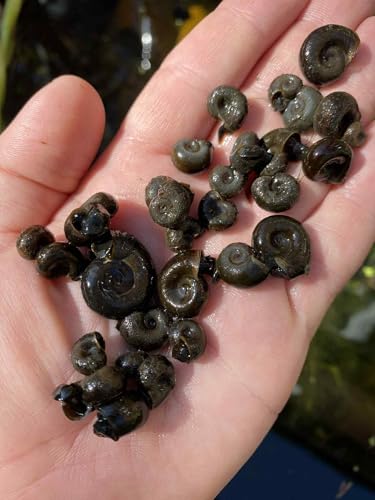
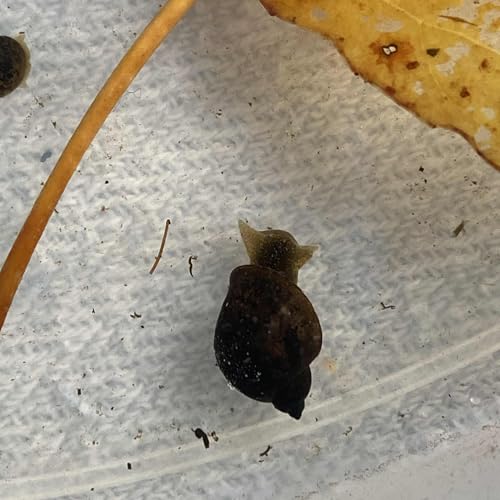
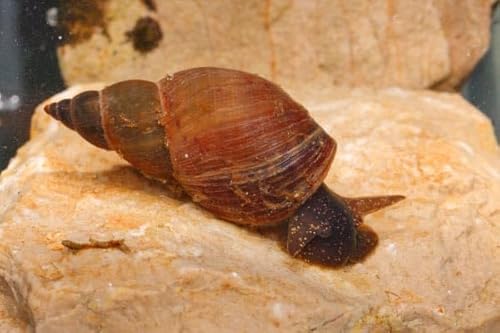
There are more than 30 kinds of freshwater snail in Britain, ranging from the likes of the tiny Dwarf Pond Snail (Lymnaea truncatula) to giants such as the Great Pond Snail (Lymnaea stagnalis) or Great Ramshorn (Planorbarius corneus). Although some snail-lovers will buy snails from aquarists suppliers or beg a few from friends’ ponds, freshwater snails have a habit of turning up, invited or not, usually attached as eggs on water plants. The eggs themselves are usually quite easy to see if you look for them, contained in a mound or strip of thick, jelly-like material on the surface of leaves and stems. Since snails are prolific breeders, once they are established in a pond, their numbers can increase very rapidly – so if you don’t want them, it pays to be vigilant.
There are two main groups of pond snails – the “pulmonates”, which breathe air using lungs and the “operculates” which get their oxygen from the water, using gills. Many of the species which are most familiar to water gardeners, including the Great Pond Snail and the various varieties of Ramshorns are pulmonates. The ability to breathe air gives them an advantage over their gilled relatives because they can colonise most types of pond, even when the dissolved oxygen level is low. By contrast, the operculates – snails such as Jenkin’s Spire Shell ( Potamopyrgus antipodarum) and Bithynia tentaculata are restricted to clean, well-oxygenated water.
The Lives of Pond Snails
Another interesting difference between pulmonates and operculates lies in their approach to reproduction. While most of the gill-breathing operculates have separate males and females, pulmonates are hermaphrodite, each individual being able to both fertilise and be fertilised by another snail – which goes some way to explain their ability to multiply quite so quickly.
However, the pulmonates aren’t the only ones with a clever breeding trick; Jenkin’s Spire Shell – an operculate – goes in for a spot of virgin-birth. Technically known as “parthenogenesis”, this allows the snail to reproduce without the need for a mate, which is a useful thing to be able to do if she find herself all alone in a suitable pond – although confusingly all of her “daughters” will actually be her sisters!
No matter how you feel about these animals themselves, it is impossible to deny that they are really very good at what they do. Even if they are never going to be your favourite kind of pond-life, their unique biology and remarkable ability to find their way to just about everywhere makes them an interesting group – however grudgingly you choose to admit it!
The habitat of pond snails.
Pond snails enjoy living in al kinds of freshwater ponds where they can breed freely and also feed on dead animals and plants. These species have benefits for the pond but they can also be pests. These water bodies such as ponds attract all kinds of animals, including the ones which, in some cases, can be harmful to the pond itself. These include pond snails which have their pros and cons also. On one hand pond snails eat algae and dead animals which is very helpful, but they can also eat the vegetation and harm your plants instead. Fortunately these aquatic snails are not attracted to fish eggs and prove to be friendly neighbours and thus safe to keep in a pond with fish. They can, however, breed in large numbers which is harmful to a pond. It is therefore important for one to learn and understand the life cycle of pond snails, which are likely to inhabit ponds with ample vegetation or make their way through neighbouring water bodies. It is important to be vigilant of snails in your pond but also remember that they are not always a threat.
Life Cycle of these Hermaphrodite Species
Entomologists recognise snails as “peppered shell and dark brown colour with dots on their bodies”. The hard shell protects the slimy body from any external damage. Snails can grow into large pond snails or dwarf pond snails, and sense food through their tentacles. Pond snails are also called aquatic snails as they cannot live outside of water bodies, leading to death on dry land. One reason that they live in ponds is to be able to hide from predators by burrowing. These molluscs can stay embedded underneath ponds substrates for months, and appear when conditions get favourable for reproduction. These snails have a greater tendency to damage pond habitat because they are Hermaphrodite which means that both males and females can lay eggs after fertilisation. A thousand eggs are laid at a time by both sexes, these eggs have the physiology of a mass of jelly attached to the plants in ponds followed by maturation to baby snails which occurs after four weeks. However, predators such as ducks and dragonflies can prevent these aquatic snails from completing their full life cycle.
These hermaphrodite species are said to take over ponds that are contaminated with faeces as stated by the WHO. This highlights the importance of keeping pond water clean. Pond snails feed on plants, algae, and leafy vegetation and can destroy them if overpopulated, but if a pond has thick vegetation these molluscs won’t cause a lot of damage before you can easily remove them. As they eat algae, they can be used in ponds that have a thick blanket of weed. Pond snails feed on different species of algae except for free-floating green algae which these snails can’t feed upon. Keeping this in mind, snails can be used to keep the natural habitat of a pond in balance, without them breeding out of proportion.
For and Against Pond Snails
Most of the common species of snails in British ponds are scavengers, feeding on plant material and detritus, scraping away at their food with a muscular, rasp-like tongue called their radula. In the days before the widespread use of UV clarifiers, this used to make them very popular with pond-keepers since their natural menu included prodigious quantities of algae. However since technology took over their role, fewer pond-keepers are prepared to turn a blind eye to their tendency to munch on water lilies and other specimen plants.
Snail fans point to their continuing usefulness in helping reduce the build up of decaying organic matter on the pond bottom. On the other hand, set against that is the contribution their waste makes to increasing nitrate levels in the water and the fact that they can act as intermediate hosts for a range of parasites – neither of which endear them to fish-keepers.
In the end, for most people, you either like them or you don’t – and that’s an end to it!
Types of pond snails commonly found
- Wandering pond snails (Radix balthica): These snails are common inhabitants of garden ponds and can help to keep the pond clean by consuming algae and other organic matter. They also serve as a food source for fish and other pond inhabitants.
- Flat ramshorn snails (Planorbis planorbis): These snails are another common pond inhabitant that can help to keep the pond clean. They are known for their distinctive flat, disk-like shells.
- Faucet snails (Bithyinia tenticulata): These snails are less common in garden ponds but can be beneficial as they are known to consume decaying organic matter and help to keep the pond clean.
- Tadpole snails (Physa acuta): These snails have long, cone-shaped shells and are known for their voracious appetites. They can be beneficial in garden ponds as they consume algae and other organic matter.
- Great pond snails (Lymnaea stagnalis): These snails are one of the largest freshwater snails in the UK and are common in garden ponds. They can be beneficial as they consume decaying organic matter, but can also become a nuisance if their population grows too large.
- Trapdoor/river snails (Viviparus viviparus): These snails are less common in garden ponds but can be beneficial as they are known to consume algae and other organic matter. They also serve as a food source for fish and other pond inhabitants.
What do pond snails eat?
Pond snails are omnivores, meaning they eat both plant and animal matter. They typically feed on algae, dead plants, and other organic matter that is present in the water. In addition, they can also feed on small aquatic animals, such as mosquito larvae, and even other snails.
What eats pond snails in the UK?
In the UK, there are several animals that eat pond snails, including birds, such as ducks and herons, as well as fish and some species of amphibians, like newts. Other potential predators include dragonfly larvae, water scorpions, and diving beetles.
How to get rid of pond snails in the UK?
To get rid of pond snails in the UK, you can use traps, such as a lettuce trap or a commercial snail trap. You can also manually remove the snails from the water or use certain chemicals, but it’s important to use them carefully and follow the instructions closely. However, keep in mind that some snails may be beneficial for your pond ecosystem, so it’s important to weigh the pros and cons before taking action.
Do pond snails eat frogspawn?
While it is unlikely that pond snails will eat frogspawn, as they typically feed on algae and other organic matter, in some cases they may try to feed on the jelly surrounding the eggs. This is more likely to occur if there is a shortage of food in the pond or if the snail population is overpopulated.
Are pond snails bad for an aquarium?
Pond snails can be beneficial for an aquarium as they help to clean up algae and organic matter, which can help to maintain water quality. However, if they overpopulate, they can become a nuisance and cause problems with water quality, such as by producing excess waste and consuming too much oxygen.
Are pond snails good for your pond?
In general, pond snails can be beneficial for your pond as they help to clean up excess organic matter and algae, which can help to maintain water quality. However, if they overpopulate, they can become a nuisance and cause problems with water quality, so it’s important to maintain a balanced ecosystem in your pond.
Are pond snails invasive?
Some species of pond snails, such as the Chinese mystery snail, are considered invasive and can cause problems in ecosystems where they are not native. Invasive snails can outcompete native species for resources, disrupt food webs, and alter water quality.
Can you have too many snails in a pond?
Yes, you can have too many snails in a pond, especially if they overpopulate and start to consume too much organic matter. This can cause problems with water quality and lead to algae blooms and other issues. It’s important to maintain a balanced ecosystem in your pond and monitor the snail population to prevent overpopulation. However, keep in mind that some snails may be beneficial for your pond ecosystem, so it’s important to weigh the pros and cons before taking action.
Do pond snails lay eggs?
Yes, pond snails lay eggs. They can lay their eggs in clusters, which are typically attached to plants, rocks, or other surfaces in the water. The eggs hatch into small snails, which can quickly grow and reproduce.
Do pond snails eat goldfish?
Pond snails typically do not eat goldfish, as they mainly feed on algae and other organic matter. However, in rare cases, they may consume dead or dying fish, especially if there is a shortage of other food sources in the pond.
Can a single pond snail reproduce?
No, a single pond snail cannot reproduce on its own. Pond snails are hermaphrodites, meaning they have both male and female reproductive organs, but they still need to mate with another snail to produce offspring.
What happens when a pond snail dies?
When a pond snail dies, its body will decompose and release nutrients into the water, which can contribute to the growth of algae and other microorganisms. The decomposition process can also consume oxygen, which can lead to problems with water quality if there are too many dead snails in the pond.
Do pond snails eat fish waste?
Yes, pond snails can eat fish waste, as it is a source of organic matter. However, they typically prefer to feed on algae and other plant matter that is present in the water.
How long do pond snails live in a pond?
The lifespan of pond snails can vary depending on the species and environmental conditions. In general, they can live for several months to a few years in a pond, but some species may have shorter or longer lifespans.
Do pond snails clear algae?
Yes, pond snails can help to clear algae in a pond, as they feed on the organic matter that can contribute to the growth of algae. However, they may not be able to completely eliminate algae on their own, and other factors, such as water quality and sunlight, can also affect the growth of algae in a pond.
What are the best pond snails to buy?
Ramshorn snails: These snails are known for their bright red or brown shells and can help to control algae growth in the pond.
Trapdoor snails: These snails have a tough, operculum “trapdoor” that allows them to close their shell for protection. They are effective at consuming algae and other organic matter, and are often used in larger ponds or water gardens.
Articles on this topic




Hi there, Having downsized a home and had to leave a wonderful big pond . . . I now have a smaller home with small south/west facing patio. Missing the enjoyment of tranquil water, I have put an old galvanised baby bath (holds about 24 litres) in a shaded corner, added stones, a small Lilly and oxygenator plants and a floating solar panel water feature to keep the water moving. After 2 weeks of settling in, I added 4 great pond snails and 4 ramshorn snails that seemed very content and immediately laid jelly clusters of eggs, then appear to slowly be dying off one by one especially the great pond snails. Have I introduced them too quickly? I feel very sad about this.
Hoping someone can help, I would like to introduce some snails to my pond, but confused about which to buy, as l keep goldfish and l am afraid they will eat them. Could someone point me in the right direction before l purchase any. Thankyou.
I have three ponds. The two smaller ones that are crystal clear and packed with snails, weed, fish and other wild life. I use these ponds to supply snails to the large pond 11′ x 14′ x 4′ deep. This pond however becomes a pea soup in the summer despite a good coverage of weed, lilies and edge plants. It is exposed to sun the whole day. Snails in this pond seem to die very fast. I am left with empty light coloured shells not crushed, so I don’t think they are being eaten. Why is this happening and what can I do about it? I used to buy flea cultures to clear the algae, but the fish are now so numerous they don’t stand a chance. Two more questions. How often do snails have to breath and how do they service the winter under ice? Do they hibernate? I hope you can help, it’s hard to get all the information you would like. many thanks
Hi, can you tell me please why some of my snails sometimes swim, or float, upside-down? They’re not dead, and if I gently nudge them right side up, they promptly turn themselves up side down again. I’ve had the pond about 4 or 5 months, and I’m totally fascinated with it. Where does all the pond life come from? Thanks, S
I am having the exact same problem as Jennifer with snails. A couple of days after adding the snails I have the clearest water ever. But after a couple of weeks as the weather began getting sooooo hot the algae has become out of control again and I cannot seem to find any of the snails. Any thoughts or ideas, or are they at the bottom mating or something and will return to do their jobs soon?
Have pond depth 4 feet to 4 inches. Well stocked with plants. Some goldfish, frogs, toads, and newts. All my snails have vanished although the water has now warmed up. Noticed because of accumulating algae on pond walls. Any ideas anyone?
I seem to have the opposite problem to most of the other enquiries. We have a new wildlife pond (late last summer) and it’s seething with stagnalis (all very small, apart from one or two a bit bigger), and they are eating my lovely new plants we have recently put in. A couple of water violets, a couple of oxygenators (I can’t remember the name) and some willow moss. Is it possible to get rid of them to enable us to replace them with Ramshorn snails, which I’ve read only eat the algae and not the plants. Thanking you in advance
Hi. I have a very small (6’x8′ ) well established pond, it has a little recirculated waterfall. I don’t keep fish, it is purely for wildlife, frogs, dragonflies and snails etc. It is full of plants and the water is beautifully clear. I have noticed recently that a lot of the snails have damage to their shells, like small circular pock marks, the outer layer almost eaten away in most cases. I wondered if it was a parasite or something I could get rid of. It doesn’t seem to affect the Ramshorn snails , just the conical ones. Any ideas/ advice ?
I’ve got the same problem. Suddenly noticed that all the small species of snail have disappeared, there were literally hundreds. The larger ones seem unaffected. Never seen this before. Is OT a bad year for them?
We have a large natural garden pond (approx. 15.5 m x 22 m) which is protected because we have a thriving colony of Great Crested newts, as well as Smooth newts. Over the years we have had the odd problem of blanket weed, but it is particularly bad this year. It started to grow vigorously when the pond was frozen over for a few days and the sun shone creating a greenhouse effect for the weed. We have plenty of the ubiquitous Great Pond snail (Lymnaea stagnalis), but no Ramshorn snails which I believe will feed on blanket weed. Could you please advise me if all the Planorbis species are equally efficient in solving our problem, or has one species advantages over the others. So far I have only seen Planorbarius corneus for sale. I should be grateful for your advice.
Something has reduced my best pond plants to bare stalks. Are pond snails to blame? If so is there a way to get rid of then other than picking them out by hand? Brian Beckett
The best solution to keeping Herons out of ponds is to buy Netfloats which are brilliant.You just join them together in the shape of your pond. Bought off the internet. George
Please can you help, I found lots of emopty shells from my pond snails, lymnea stagnalis Why did they die?, my pond is small and abouy 18 inch deep, is it because it is too hot? I made sure that there is lots of plants around for a shade. Could it be some virus brought by birds on their wings while bathing? If they died of hunger what should I feed them with? I have also flatworms, would they be carrying some parasite? I do not have fish, and also there is no sign of frogs or frogspawn…. I covered my pond with plastic net to prevent birds from bathing they have separate bowl, because I am worried that this is the cause of my pond snails to die. Do not want to order any more snails untilmI know what happened. Please answer my Qs.
Like many of the other coments I have lost all my snails since last winter. I think they were doing a good job in keeping down the algae and blanket weed since this year both have increased greatly. There has been repeated visits by a heron and I did use a weed killer(Round up) around my ponds in early spring. Did any of these factors cause their demise? The fish seem OK only very nervous due to the heron. I am keen to reintroduce snails to my pond.
Elizabeth Do you have tadpoles in your pond. They like to snack on snails – not a pretty sight when the poor snail is surrounded by them – doesnt stand a chance.
sounds like your snails are being eaten by something, perhaps the fish or possibly rats
Hi there, i wonder if you can help me ? Over the past week or so all the snails in one of my ponds have died. They have all changed colour from black to light brown. Other pond life appear unaffected. Any suggestions what the problem is ? Cheers.
Hey, I want to collect some Great Pond Snails from my local park (I have asked permission) but I want to make sure they are free of disease and pest. They are being put in their own “aquarium” set up, but I don’t want anything getting in which will cause havocc. Could you please inform me of ways to ensure they are disease and pest free. Are there any parasites that could be spread to humans? How can I ensure they are clean? Thank you!
have a serious problem with blanket weed have tried most remedies but it keeps returning its only a wildlife pond newts frogs dragonfly nymph etc no fish so im considering snails as the last resort any thoughts
Hi, I bort some fish and in the pond weed I found a tiny pond snail. I don’t have the fish anymore but I still have the pond snail. Where should I keep it? Do I need to feed it? How do I look after it? Right now it is living in a plastic jug with a pond plant and some gravel from my old fish tank but I know that is definitely not a suitable place for it to live! So please help me with the questions above so I can have a healthy, happy pond snail. It was living in the jug on the side in my middle room but I have moved it outside so the rain water can help clean the old water out as the water that the snail is in now is filled up with its poop! Another question: Do I have to clean out the place that the pond snail is living in?? Please help me. Hope you have some good advise. Thanks. Rose J.
Thanks for an informative and well written piece. My new (6 x 10 x 2ft 6 deep) wild-life pond was planted up in March. I have no experience of garden ponds so it’s interesting to watch it develop. Birds bathe at the beach end and gold finches come in pairs – they take it in turn to do their ablutions! There are loads of what I think are boatmen and insects that skitter and today I saw a large water snail. From what you say they are a mixed blessing so it seems like everything else in life – balance is the key. Can you tell me if water snails have any predators which could control their number – for example the extremely aggressive blackbird? Should I import a toad or frog or just leave nature to do its thing?
Question: Can snails be used as a tool to control oxygen weed in rfesh water ponds?
It seems I am not the first to have this problem reading above but I can’t see any replies: We have a large garden pond (approximately 15’x4’x 1 metre deep. We introduced some Giant Ramshorn snails last year to help keep the pond clear of weed and the water was wonderfully clear but since this winter we seem to be plagued with blanket weed which attaches itself to the oxygenating plant and I haven’t seen anything of the snails. The weed problem is in fact worse than it was before the snails were introduced. I’m not sure where to go from here! Are the snails gone? We do have fish, just goldfish, which seem to be thriving! Any advice would be very welcome! Thank you!
Is it OK to introduce ramshorn snails to my small outdoor pond now? Or is it too cold? I have had them before but all disappeared over winter and big build up of algae on sides of pond. thank you Sylvia
My ponds is full of snails! They have flourished in my pond but it is becoming a soup of snails. What should I do? Anyone want a few hundred?
Can anyone help me i have bought some pond snails and they are the size of a pin head!!! I could not quite believe it. If i put them in my pond surly my fish will eat them? So how do i look after them until they are big enough? Can anyone please Help me? Thankyou
My pond snails have not laid any eggs this year ,there are lots of snails but I do find quite a lot of small grey empty shells has anyone got the answers?
Should I put snails in my barrel pond in late August or wait till spring? I am in Virginia in U.S. Also what are best ones for here ( I would like colorful ones, too.)?
I have three ponds in my suburban garden. I have recently noticed that the common pond snail population has dropped a lot in two ponds, winter 2014, completely gone in the other pond strangely the red ramshorn snails are abundant. These ponds are left to evolve as they will frogs and toads use all three,no fish. Any idea as to why this has happened?